Cross-border Riven breaks down Agentic Commerce — as AI shifts shopping from "people browsing stores" to "agents buying for you," it rewrites the rules for brand e-commerce and going global. How products get ingested, aggregated and purchased by AI, the split between the ACP/UCP open ecosystem and Amazon's Rufus walled garden, and new playbook metrics like Share-of-Card and DTC capture rate.
On the day Anker Innovations completes its A+H dual listing, Riven unpacks what this "playbook of Chinese DTC globalization" got right — RMB 30.5B revenue in 2025, 9.48% R&D intensity, Amazon share deliberately cut to 52%, the Anker/eufy/soundcore brand matrix, and its pivot from accessory king to edge-AI and embodied intelligence. Plus a GEO-lens take on AI-era brand marketing and 6 takeaways for cross-border brands and agencies.
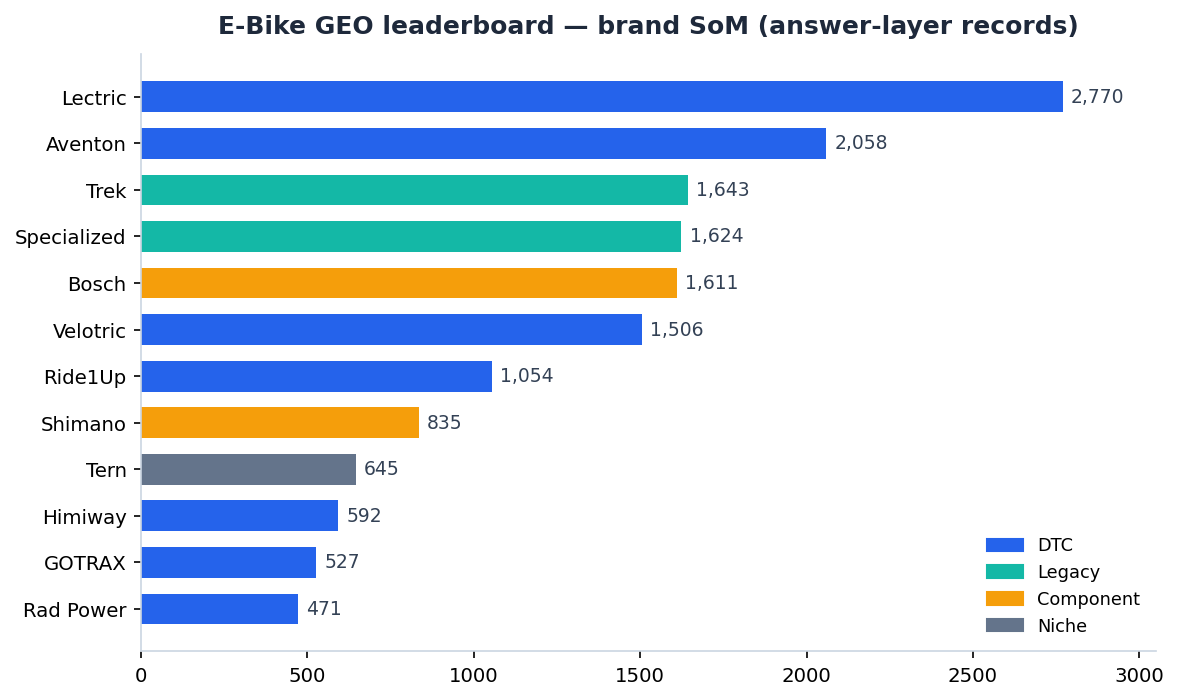
Riven and GEOly AI decode the e-bike category's AI landscape from GEOly industry data — 14 sub-categories / 115 topics / 1.65M monthly AI queries, GEO leader Lectric, median price $1,221 (70% under $1,500), Reddit as the 99%-direct citation base, and Lectric topping both the GEO and GEM ad leaderboards. With 5 first-party data charts.
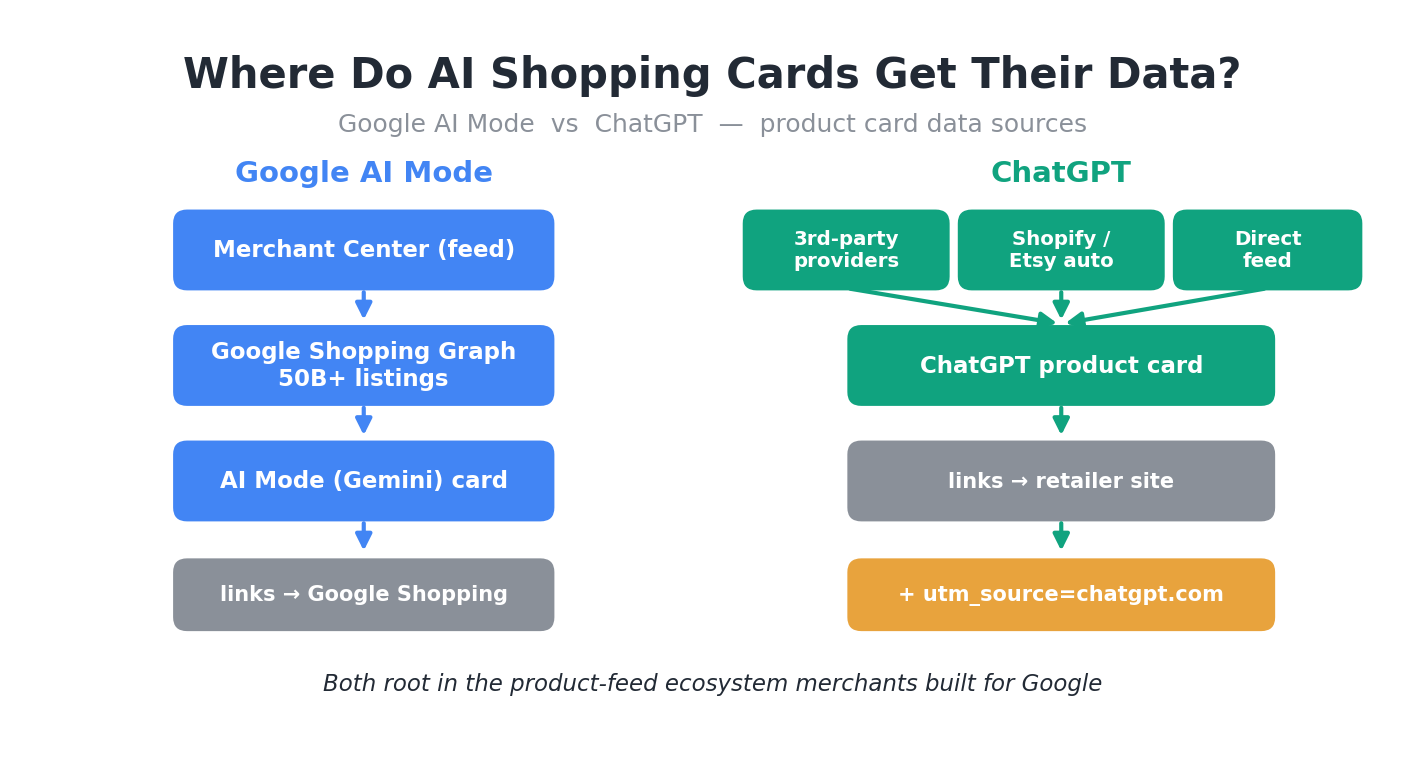
GEOly AI analyzes millions of ChatGPT shopping cards and tens of thousands of Google AI Mode cards at the link level to trace where AI "product cards" (title/price/rating/buy link) actually pull their data — Google reads its own Shopping Graph (entry = Merchant Center), while ChatGPT has no single entry, reusing merchants' existing feed ecosystem and stamping utm_source=chatgpt.com.
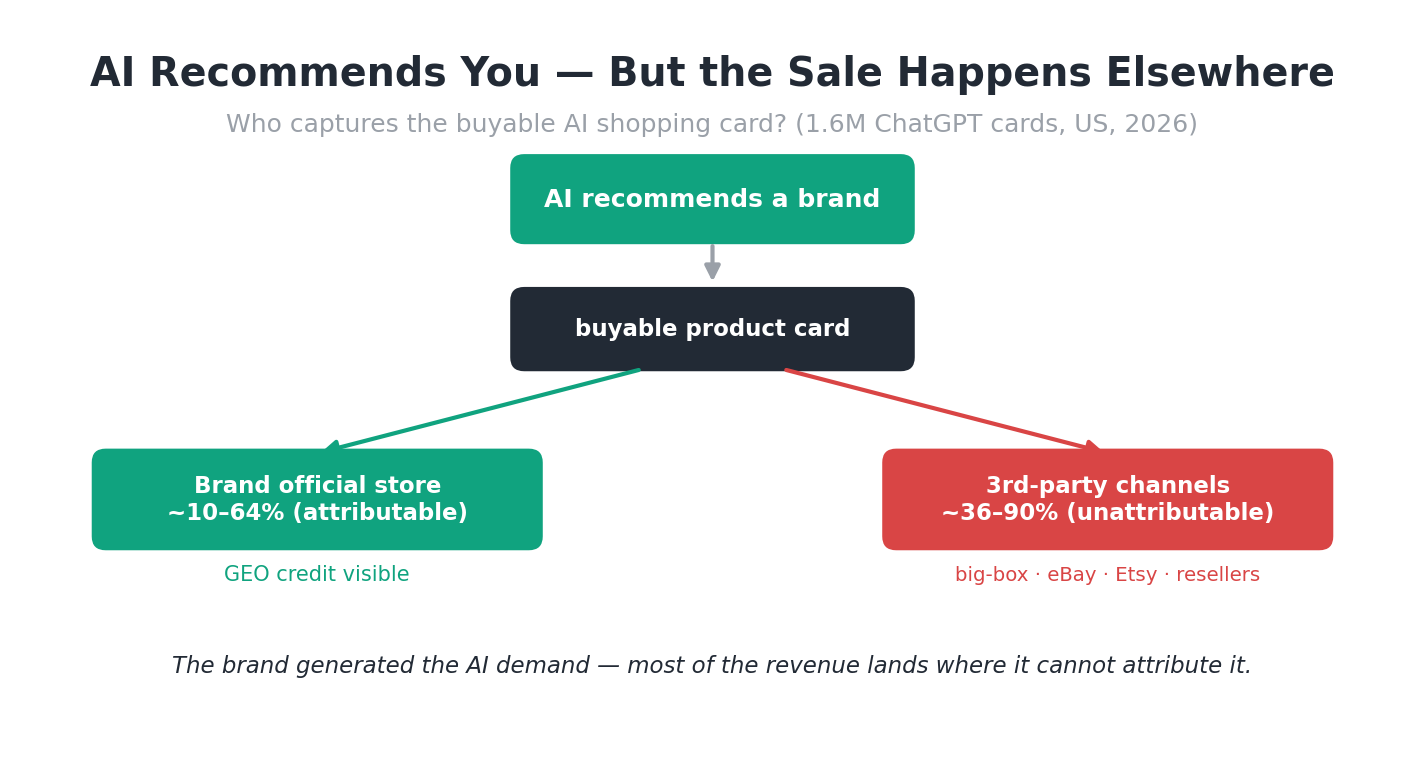
GEOly AI analyzes 1.6M ChatGPT shopping cards + 3.07M in-card offers — brand official stores hold just 1.9% of the AI shelf, and per-brand capture is only 11% for Ring, 27% for Anker, 32% for eufy; 35–90% of a brand's cards are intercepted by Walmart/Best Buy/eBay/resellers, while Amazon has 0 cards on the ChatGPT shelf. That means unattributable GEO-driven revenue is badly underestimated — and here's how to win it back.
Riven and GEOly AI turn ChatGPT ads from "understood" into "executable." Based on monitoring 136,999 ChatGPT answers, 5,479 ad samples and 521 advertisers (US, GPT-5.5). The master key — ChatGPT has two shelves (Research mode vs Recall mode) and ads only sell on one of them — plus a 6-stage playbook, keyword priority (X vs Y ad rate 22.2%), creative rules to fight "last-slot insertion," and a first-mover window where 84% of ad topics have just one advertiser.
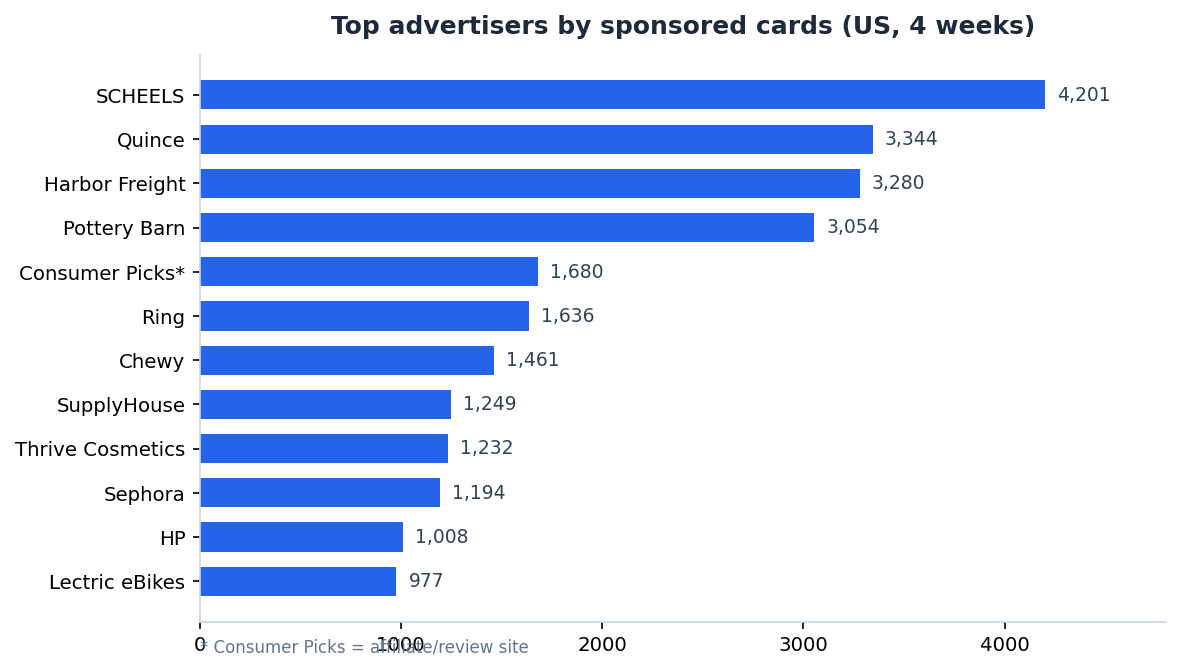
Riven and GEOly AI break down the ChatGPT ads ecosystem from 84,665 ad cards, 2,352 advertisers and 12,574 topics captured in May–June 2026 — the mid-June 8.5x inventory surge, who is buying, which categories trigger ads, SKU-level shopping-card creatives, and how cross-border sellers should grab this early window.
Riven decodes three live agentic assets field by field — momcozy.com/agents.md, shop.app/SKILL.md, and a real Shop agent search response — to derive the 5-gate Agentic revenue model (Discoverable → Recommended → Added-to-cart → Checked-out → Reordered), three-track attribution, and what ecommerce brands must do now.
Riven breaks down Shopify Spring 2026 Edition — what "Commerce Everywhere" really means, how agentic commerce moves your products into ChatGPT and Copilot, the Catalog API and Universal Commerce Protocol, Sidekick and Campaign Autopilot, Managed Markets expansion, Shop Pay everywhere, plus five takeaways and an action checklist for global ecommerce brands.
GEO does not replace SEO — it complements it. Here are five dimensions comparing Generative Engine Optimization with traditional SEO, plus practical advice to run them together.
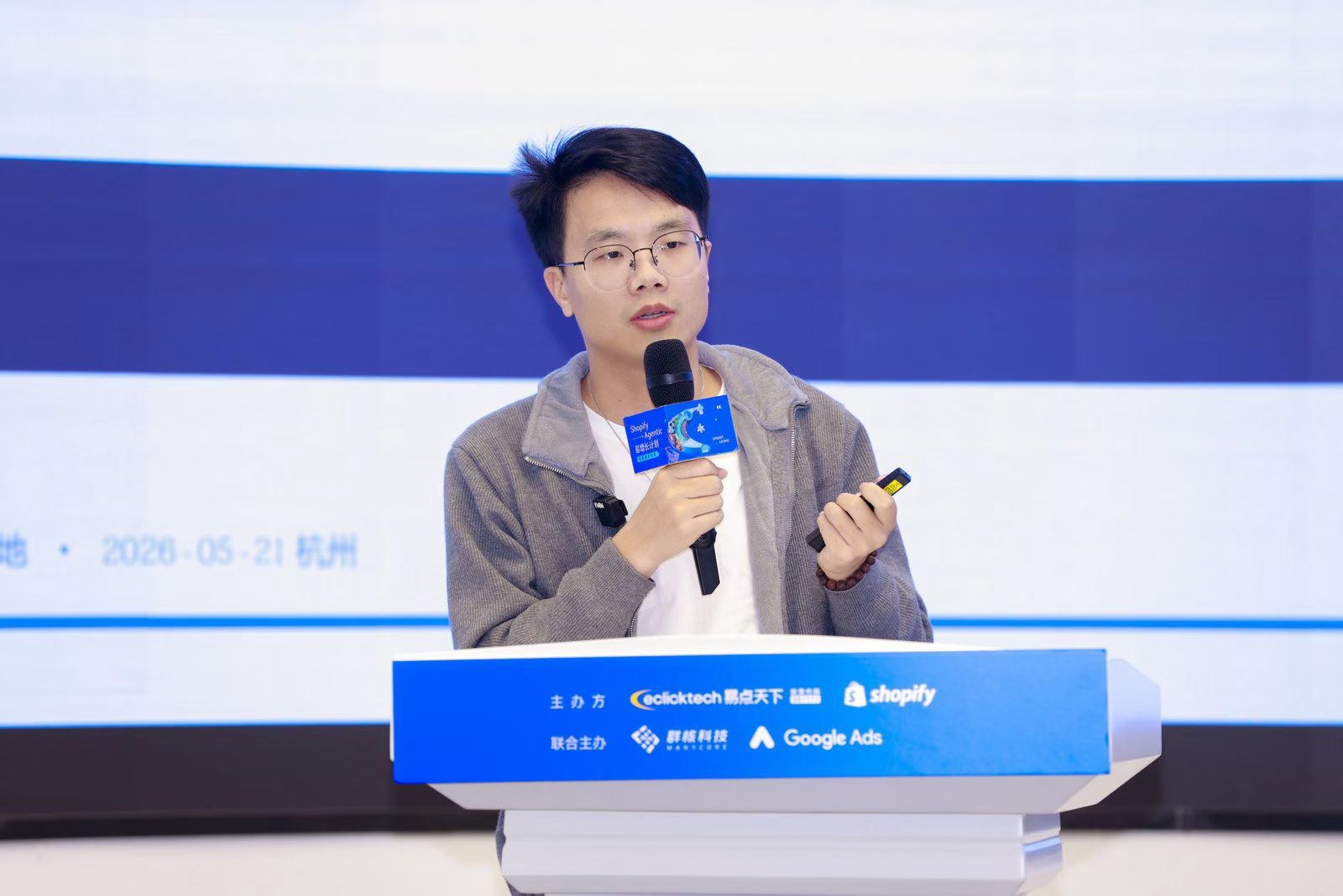
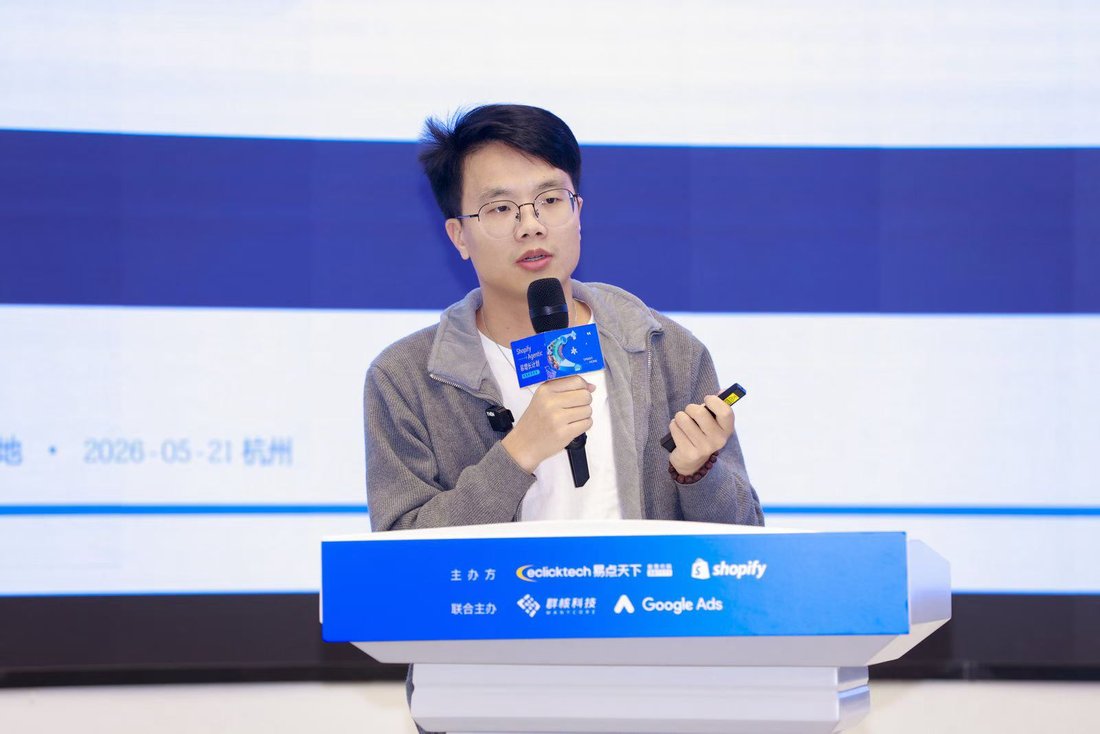
A breakdown of my Cyberklick × Shopify Hangzhou keynote: the core difference between GEO and SEO, the SEO×GEO dual flywheel, the three uncertainties behind AI recommendations, Shopify's four-layer AI Commerce architecture, plus the GEO workflow, audit checklist, and 90-day roadmap for Shopify merchants.
GEO (Generative Engine Optimization) is optimizing content for AI search like ChatGPT, Perplexity, and Gemini. Here is what it is, why it matters, and how it relates to SEO.